Check availability at Villa on Dunbar Rock
Your dates carry over to every other resort you look at.
Check AvailabilityWe may earn a commission if you book through this link, at no extra cost to you. This never affects which resorts we list or how we rank them.
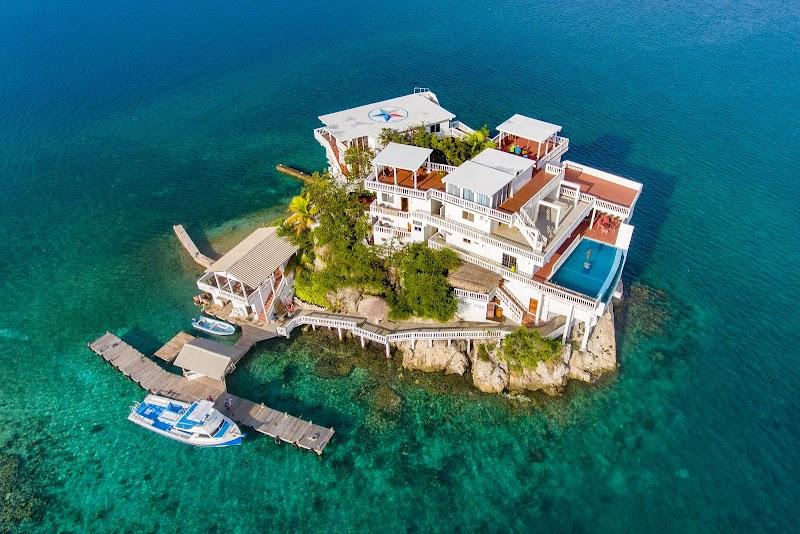
A one-of-a-kind adults-only boutique hotel built atop a rock formation in Honduras' Guanaja Bay. This architectural marvel offers spectacular harbour views, world-class diving in pristine reefs, and intimate accommodations. The dramatic setting and exceptional underwater experiences make it a bucket-list destination for diving enthusiasts.
Atmosphere
Amenities
Quick answers
- Is Villa on Dunbar Rock adults only?
- Yes — Villa on Dunbar Rock is an adults-only resort, so children are not accommodated.
- Where is Villa on Dunbar Rock?
- Villa on Dunbar Rock is in Guanaja, Honduras. Its address is Dunbar Rock, Guanaja, Islas de la Bahía, Honduras.
- How many rooms does Villa on Dunbar Rock have?
- Villa on Dunbar Rock has 11 rooms.
- Is Villa on Dunbar Rock all-inclusive?
- Yes — Villa on Dunbar Rock is an all-inclusive resort, so meals, drinks and most on-site activities are covered by the rate.
Traveler Insights(180 discussions)
Villa on Dunbar Rock is the resort that serious scuba divers talk about in the way food people talk about a restaurant with no sign and a three-month waitlist. It sits on its own private cay off Guanaja in the Bay Islands of Honduras - an archipelago that is best known for world-class diving but sees a fraction of the visitor traffic that Roatan generates. Maximum 22 guests, truly personal service, and dive sites that see so few divers that large marine life populations have no reason to be skittish. With only two dive operators on all of Guanaja, the math of crowding is simply impossible.
The Jado Trader wreck is the signature dive - a 240-foot ship sunk intentionally to create an artificial reef, now so encrusted with sponges and corals that it reads as natural reef from a distance. Beyond that single site, the reef systems around Guanaja are in legitimately pristine condition. Visibility of 100 feet is the norm rather than a good day exception. The dive operation handles all equipment logistics so you arrive at the boat ready to dive. The food, multiple independent reviewers specifically note, is genuinely excellent - not a small thing when you eat every meal at the same property for a week. The infinity pool deck at sunset is a beautiful end to every dive day.
This resort exists for serious divers who want the best uncrowded Caribbean diving available and are willing to navigate Honduras logistics to get it. It is not for beach loungers, nightlife seekers, families with non-diving children, or anyone who cannot fully disconnect from internet access. Divers who make the effort consistently report it among the best dive trips of their lives, and repeat visit rates are high. It competes at a moderate price point compared to Maldivian or Palauan dive resorts of comparable water quality.
Pros
- +Access to 50+ virtually untouched dive sites around Guanaja with only two dive operators on the entire island - you will never share a site with a tour group
- +The wreck of the 240-foot Jado Trader is considered one of the premier artificial reef dives in the entire Caribbean, encrusted with sponges and corals and surrounded by massive schools of fish
- +Visibility regularly reaches 100 feet on non-rainy-season days, with reef systems showing almost zero cumulative diver impact
- +Full concierge dive service means staff carry and set up all gear so you walk to the boat empty-handed and put your equipment on two minutes before entering the water
- +Three daily boat dives plus unlimited shore diving around the cay are included in the all-inclusive rate
- +Maximum 22 guests at the entire property ensures a genuinely intimate, private-island atmosphere that larger dive lodges simply cannot replicate
- +Food quality is consistently called out as exceptional - not good for a remote dive resort but genuinely excellent gourmet cooking that guests specifically mention
- +Nurse sharks, eagle rays, sea turtles, and sleeping sharks in caves and tunnels are routine sightings rather than occasional highlights
Cons
- −Getting to Guanaja, Honduras requires a connection through San Pedro Sula or La Ceiba plus a regional flight to the island - it is a genuine full-day journey from most North American cities
- −This is a specialist dive resort and non-divers will have limited activities in an environment that may feel too isolated without enthusiasm for underwater experiences
- −Only 9 ocean-front rooms and 2 suites means the property books up far in advance, especially for peak February through May weeks
- −Honduras carries an elevated US State Department travel advisory that makes some travelers uncomfortable regardless of the Bay Islands' significantly different safety profile from the mainland
- −Rainy season from roughly October through January brings reduced visibility below the usual 100-foot standard and more unpredictable surface conditions
- −Internet and communication infrastructure on Guanaja is limited - this is a true off-grid destination, which is a feature for some and a dealbreaker for others
- −The all-inclusive price is substantial for a relatively simple physical property compared to what you get aesthetically at Mexican or Eastern Caribbean resorts
- −No nightlife, no off-property activities, no shopping - the isolation is total and the only agenda is diving, eating, and sleeping
Common Questions
How do you actually get to Villa on Dunbar Rock?
Is Guanaja safe given Honduras's State Department advisory?
What certification level is needed to dive here?
How does diving here compare to Roatan?
What do non-divers do at Dunbar Rock?
When is the best time to visit?
Google Rating
Google Reviews
“Where do I begin? This place is Amazing along with the staff, dive masters even down to the massage therapist, Filipo! The staff knew my name and always greeted myself and the group with a smiling face and 5 star service. The rooms are clean with...”
“We spent a week with the amazing team at Dunbar Rock. Everyone is so kind and courteous. Mr. Dennis and Elsie were extremely accommodating and informative. Reba, Haylie and Zatina were so kind and made sure we got everything we needed while having o...”
“This place is the most incredible vacation experience we’ve ever had! The service by all is impeccable and the diving superb! Our room was huge, squeaky clean, and comfortable with an amazing view. Special shout out to Jesse and Randy, our dive te...”